


The Patronal Church originally grew up as a chapel subordinated to the canons of the island of St. Giulio and was rebuilt in Romanesque style in the XII century with the dedication to St. Audenzio.







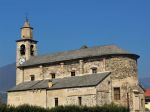
The Patronal Church originally grew up as a chapel subordinated to the canons of the island of St. Giulio and was rebuilt in Romanesque style in the XII century with the dedication to St. Audenzio.

The church of Saints Audenzio and Caterina preserves, on the north side, next to the modern bell tower (1792), the evocative twelfth-century bell tower, one of the oldest along the lake coast.
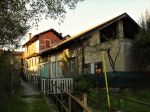
The characteristic Museum of Art and Wood Turning is located in an ancient wood processing factory belonging to the Maulini family that kept the activity from 1886 to 1970.
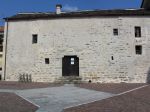
Located on the Town Hall square, it is the seat of the Pro Loco Pettenasco Nostra Association.
Overhead rooms host exhibitions and periodical shows.
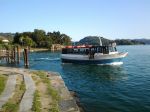
It is undoubtedly one of the most romantic lakeside walks in the province.
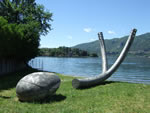
t is worth to see the curious installation called "Vers le autre côté" by Roselyne Erutti and commonly called "Fionda" at the end of the south section of the lake promenade.
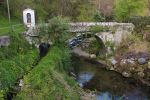
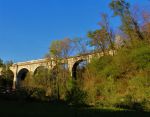
The Roman bridge is placed at the beginning of Val Fatta and crosses the creek Pescone, the largest tributary of Lake Orta, which rises from the Mottarone ; just under the great arch we find the Paganetto, famous for the pure water of the spring.
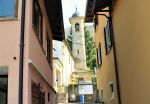
The church of St. Martino is located in the hamlet of Crabbia, it has a single nave and it has an elegant porch dating 1868 on the front.
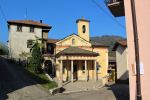
It is an old building whose origin is unknown. Very charming and delicate, it is a small pearl that the inhabitants look after with great love.
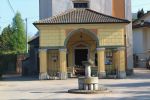
The building was designed by the architect G.B. Martelli from Miasino at the end of the 18th century.